Not long ago, building an application required months of development, a team of engineers, and a deep understanding of programming languages. From writing backend logic to designing user interfaces, every step demanded time and technical expertise.
Today, that reality is changing rapidly. Thanks to Large Language Models (LLMs), the journey from idea to fully functional application is becoming faster, simpler, and more accessible. You can now describe your idea in plain language, and AI can turn that prompt into a working app.
Welcome to the era of “prompt-to-production.”
The Shift from Coding to Prompting
Traditional development relied heavily on manual coding. Developers had to define every feature, structure databases, and integrate systems step by step. LLMs have introduced a completely new workflow.
Instead of writing code, you describe what you want. The AI interprets your intent and generates the application’s structure, logic, and even design elements.
This is where tools designed for AI to AI generate app solutions are gaining massive traction. They allow users to move from concept to execution without needing to understand the technical details behind the scenes.
In simple terms, prompting is becoming the new programming.
How LLMs Generate Full Applications
LLMs are trained on vast amounts of data, including code, design patterns, and user interactions. This enables them to generate not just snippets of code but entire application frameworks.
Modern systems can:
- Create user interfaces
- Set up databases
- Define workflows and automation
- Integrate APIs
- Build chatbot functionality
Some platforms even generate production-ready apps from a single prompt, handling everything from authentication to hosting.
What Happens Behind the Scenes?
- Prompt Understanding: The AI analyzes your input and identifies requirements
- Code & Structure Generation: It builds the frontend, backend, and data models
- Workflow Integration: Business logic and automation are added
- Deployment Setup: The app is prepared for launch with hosting and scaling
This process eliminates the need for manual coding in many use cases.
Real-World Examples of Prompt-to-App Technology
The concept of generating apps from prompts is no longer theoretical; it’s already happening.
- AI platforms now allow users to build and share full applications simply through conversation, without coding.
- New tools enable users to describe app ideas and instantly generate functional mobile apps in minutes.
- Design platforms are integrating AI features that turn prompts into working prototypes ready for refinement.
These advancements show how quickly the industry is moving toward AI-driven development.
The Rise of AI App Builders
AI app builders are at the center of this transformation. These platforms combine LLM capabilities with development infrastructure, allowing users to create apps without writing code.
An app builder AI platform typically offers:
- Prompt-based app generation
- Visual editing tools
- Pre-built templates
- AI chatbot integration
- Deployment and hosting support
This combination allows users to go from idea to a working product much faster than traditional methods.
From Prototype to Production in Record Time
One of the biggest advantages of LLM-powered development is speed. In traditional workflows, creating even a basic prototype could take weeks. Now, users can generate a functional app in minutes and refine it over time.
What This Means for Businesses
- Faster product launches
- Lower development costs
- Ability to test ideas quickly
- Reduced dependency on large engineering teams
This is why many startups are turning to tools that AI generates app solutions—they enable rapid experimentation and quicker go-to-market strategies.
The Role of AI App Makers in Modern Development
AI app makers are not just tools; they are becoming collaborative partners in development.
An AI app maker can assist with:
- Generating code from prompts
- Suggesting improvements
- Debugging issues
- Enhancing user experience
Instead of replacing developers, these tools enhance productivity by automating repetitive tasks. Developers can focus more on strategy and innovation while AI handles execution.
No-Code Meets LLM Intelligence
No-code platforms have been around for years, but LLMs have taken them to a new level.
Previously, no-code tools required manual configuration of workflows and components. Now, AI can generate those workflows automatically.
This combination of no-code and AI enables:
- Fully automated app creation
- Intelligent customization
- Real-time updates through prompts
With an AI application builder without coding, users can create complex applications without technical expertise.
Challenges and Considerations
While LLM-powered app generation is powerful, it’s not without challenges.
Key Considerations
- AI-generated code may require validation
- Complex applications may still need customization
- Security and scalability must be carefully managed
Research shows that while LLM-based systems can generate and deploy apps effectively, they still require structured environments to improve reliability and accuracy.
This means human oversight remains important, especially for production-level applications.
The Future of Prompt-to-Production Development
The evolution of LLMs suggests that app development will continue to become more automated.
We are moving toward a future where:
- Apps are built entirely through conversation
- AI handles most technical tasks
- Development cycles shrink from months to weeks, or even days
- Anyone can create software, regardless of their technical background
The rise of tools like app builder AI platforms is just the beginning of this transformation.
Build Smarter AI Apps with Workmaster
At Workmaster, we are redefining how applications are built by combining the power of LLMs with a seamless no-code experience. Our platform enables businesses, creators, and teams to turn ideas into fully functional applications without writing code.
Using Workmaster, you can leverage an advanced AI app maker to generate complete applications from simple prompts. Our platform interprets your intent, builds the structure, integrates AI chatbots, and automates workflows, all within a unified environment.
With built-in templates, AI agents, and Pay-As-You-Go LLM integrations, Workmaster allows you to go from concept to production in record time. Whether you're building internal tools, customer platforms, or AI-driven solutions, Workmaster makes app development faster, smarter, and accessible to everyone.
Ready to turn ideas into AI-powered apps? Build something amazing with Workmaster.
Start For FreeHome Screen Overview
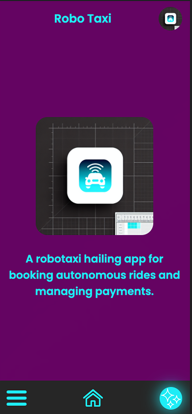
Workmaster delivers a gentle, welcoming interface that perfectly reflects the pastel aesthetic.
Comprehensive Navigation
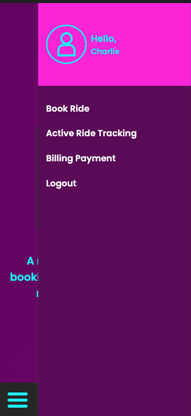
The platform automatically generated a sidebar to manage meditation libraries, breathing sections, and user progress effortlessly.
Personalized Timer
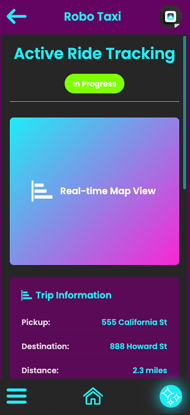
Users can adjust session duration and ambient sound settings for a personalized meditation experience.
Progress Dashboard
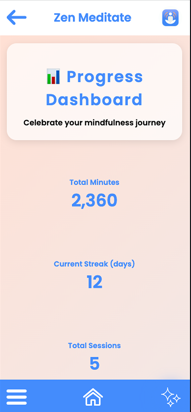
The AI added streak tracking and total minutes monitoring, motivating continued mindfulness habits.
Guided Breathing
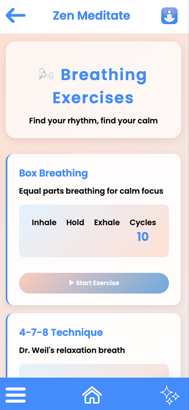
Interactive breathing modules were automatically configured to enhance relaxation and breath control.
Daily Inspiration
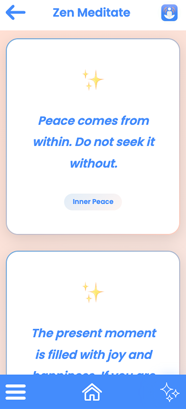
Daily affirmations were added to provide continuous emotional encouragement and positivity.
Ready to turn ideas into AI-powered apps? Build something amazing with Workmaster.
Start For FreeHow Generative AI Enhances App Reliability and Consistency
One of the lesser-discussed advantages of Generative AI tools in development is their ability to maintain consistency and reliability across an application. Traditional development often involves multiple designers and developers, which can sometimes lead to uneven UI patterns, mismatched components, or functional inconsistencies. AI-driven systems, however, follow standardized logic and design rules, ensuring uniform layouts, predictable behavior, and structured workflows throughout the app. They also reduce human error by automating repetitive technical tasks. This leads to cleaner architectures, fewer bugs during execution, and smoother user experiences. As systems evolve, AI can further assist in optimizing performance, UI clarity, and structural stability over time.
The Future Is Generative, and It’s Already Here
“Zen Meditate” demonstrates how generative technology is transforming app creation from a complicated technical task into a simple conversational experience. Workmaster doesn’t just create visually appealing designs; it builds real, usable products ready for businesses and users.
This innovation isn’t only about speed; it’s about unlocking limitless creativity. Whether you’re an entrepreneur, startup founder, or enterprise leader, you can now convert ideas into live products effortlessly using a no-code application builder like Workmaster.
Build Your Next Big Product with Workmaster
Workmaster is redefining how ideas turn into real, working applications. Whether you’re a startup validating an MVP, a business accelerating digital transformation, or a creator bringing a new concept to life, Workmaster empowers you to build faster, smarter, and without coding complexity. Powered by advanced Generative AI tools and an intelligent no-code application builder, it transforms simple prompts into beautifully designed, fully functional products in minutes. From UI design to feature automation, everything happens effortlessly, helping you focus on innovation instead of development hurdles. The future of app creation is already here, and Workmaster makes it achievable for everyone.
Frequently Asked Questions (FAQs)
What does “AI generate app” mean?It refers to using AI tools or LLMs to automatically create app structure, features, and workflows from simple text prompts.
How does an app builder AI platform work?It uses AI models to interpret user input, generate code, design interfaces, and configure backend systems without manual coding.
Can beginners use an AI app maker effectively?Yes, beginners can easily use AI tools to build apps, as they rely on prompts and visual interfaces instead of coding skills.
Are AI-generated apps suitable for real-world use?Yes, but they may require testing, customization, and optimization to ensure performance, security, and scalability in production environments.
How fast can I build an app using AI tools?You can generate a basic app in minutes and refine it into a launch-ready product within a few weeks.
Related reading
AI app builder · How Vibe Coding Influences No Code AI App Builders in 2026 · Build App with AI Chatbot: The Smartest Way to Launch in Weeks, Not Months