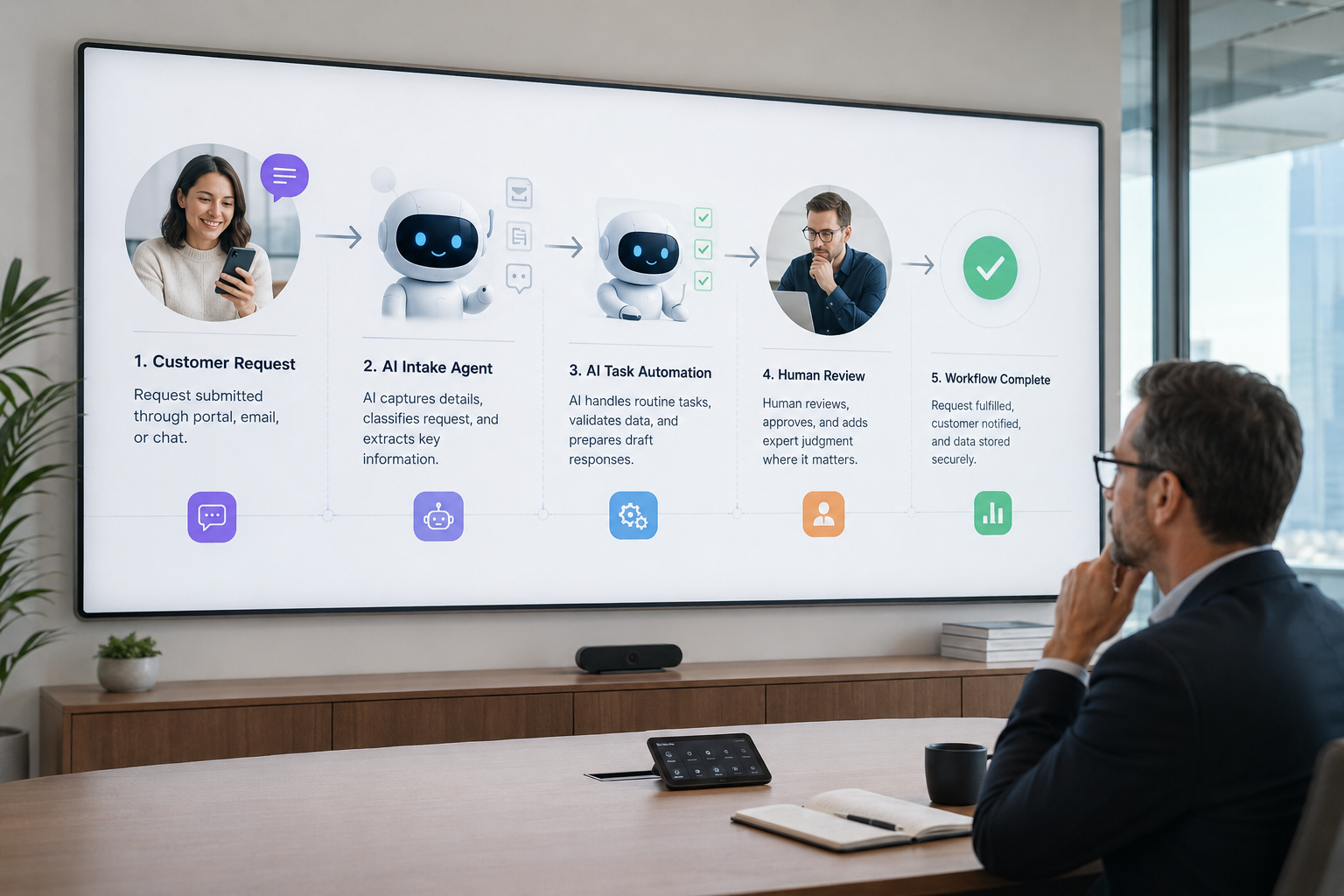
As the CEO of an AI-driven business process automation startup, I’ve witnessed first-hand how workflows—those structured series of steps designed to achieve organisational goals—are evolving. For decades, workflows have underpinned the operational backbone of companies, offering a clear and intuitive framework for mapping out tasks performed by individuals, often in sequence, with each outcome shaping the next step.
Our technology empowers businesses to define and visualise process sequences effortlessly, typically as flow diagrams. Over time, workflow engines have matured into sophisticated business process execution platforms. These platforms not only streamline operations but also continually learn from thousands of process iterations, identifying patterns and driving optimisation at every stage.
How is AI reshaping this landscape?
Traditionally, most business workflows have involved multiple human agents: a requester and one or more service providers. Think of booking annual leave, onboarding new employees, or managing customer support queries—these are classic non-financial processes. Historically, service providers relied on training, experience, and established guidelines to complete their tasks.
Today, AI is stepping into these roles. Advanced large language models (LLMs) are multi-modal, capable of processing text, images, and even audio. They can engage with employees or customers via chat interfaces, request and verify documents, and perform tasks such as reviewing CVs for recruitment, checking compliance documents for HR onboarding, or scrutinising inventory lists for supply chain management. AI can even analyse video feeds for security checks or virtual meeting attendance verification.
Modern automation platforms now integrate these capabilities, enabling even non-technical business owners to build end-to-end processes simply by conversing with an AI-powered builder bot. You describe the desired workflow—say, scheduling a maintenance request or handling a customer complaint—and the bot guides you through constructing the process diagram, refining it until it’s fit for purpose. Once deployed, the AI chatbot can proactively initiate workflows: for example, when a customer requests product support, it can collect necessary information, trigger the appropriate process, and keep all stakeholders informed.
Each step is managed by an AI agent acting as the service provider. It documents its decisions, operates at lightning speed, and can access relevant databases—such as checking available slots for meeting rooms, verifying employee credentials, or managing logistics for event planning. For tasks requiring human oversight, the AI can offer recommendations and defer the final decision, ensuring compliance and human judgement remain integral.
For auditing purposes, the agent is able to document its reasoning and remarks, thereby facilitating verification of proper performance.
AI-powered workflow engines are poised to transform businesses by eliminating repetitive drudgery and enhancing efficiency. With instantaneous processing, organisations can respond faster to requests, deliver services more swiftly, and free up their teams to focus on creative and strategic work. The future is not just about automation—it’s about intelligent orchestration of business processes, unlocking new heights of productivity and innovation.